

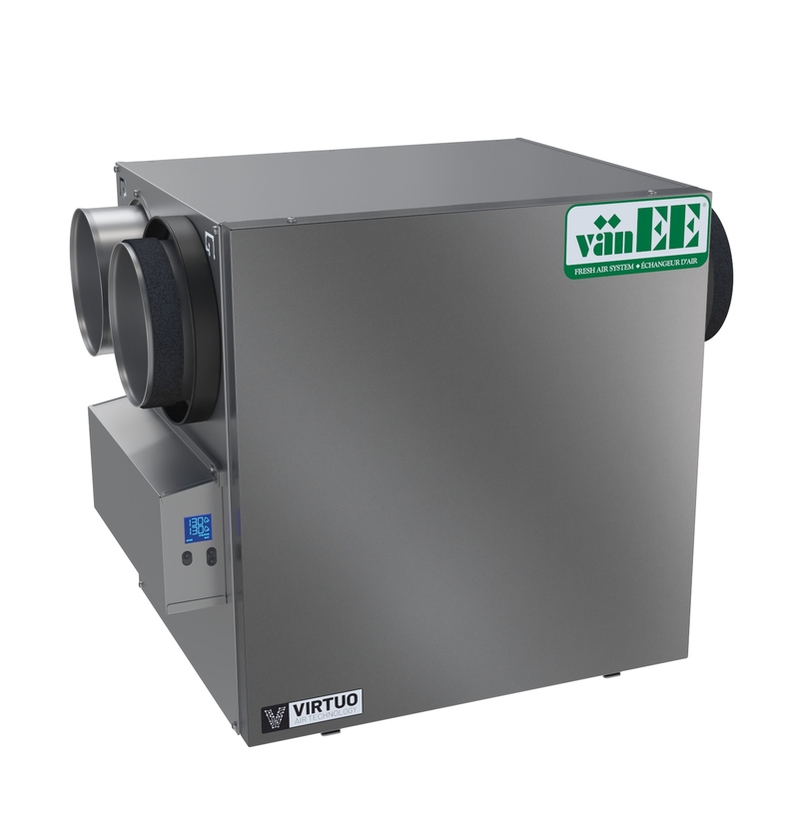
An air exchanger helps improve indoor air quality by ensuring proper ventilation.
Air exchangers renew indoor air by exhausting stale air and bringing in fresh air from outside, while recovering part of the energy used to heat or cool the outgoing air. When indoor air quality is not optimal, various symptoms may occur, such as:
- irritated eyes and dryness
- breathing difficulty or wheezing
- shortness of breath or worsening of existing asthma, heart or lung conditions
- persistent cough
How Does an Air Exchanger Work?
An air exchanger removes stale indoor air—air that has already been breathed—and brings in fresh outdoor air through two separate ducts, without mixing them. It can be installed in all types of buildings, and several models meet the specific needs of each home.
Since 2004, air exchangers have been mandatory in all buildings, as insulation standards have reached a level where natural air infiltration is no longer sufficient to renew indoor and maintain adequate oxygen levels for comfortable living.
What are the advantages of an air exchanger?
Using an air exchanger helps reduce indoor pollutants such as humidity, odours, allergens, and VOCs (volatile organic compounds), while improving thermal comfort and lowering heating and air conditioning costs. It is also easier to heat air with controlled humidity, which helps reduce electricity consumption.
Questions ?